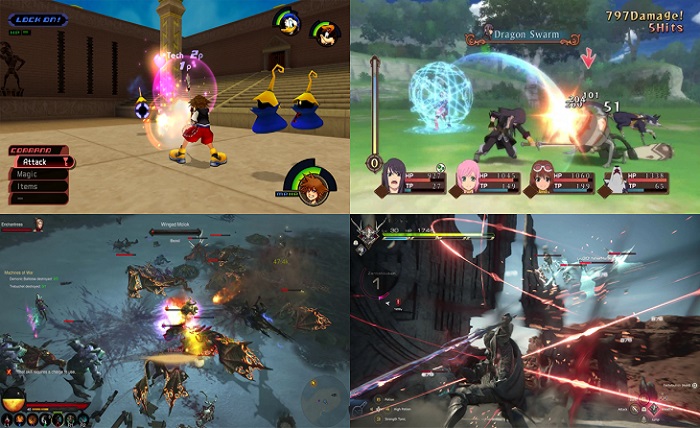
Every few years, someone writes an article declaring turn-based combat dead. The argument is always the same. Modern players want action. They want real-time feedback. They do not have patience for menus and wait times. And every few years, a turn-based JRPG sells millions of copies and proves the argument wrong. This cycle has been repeating since at least 2005, and at this point the “turn-based is dead” take has a worse track record than the combat system it keeps eulogizing.
The reason turn-based combat endures is not nostalgia, though nostalgia certainly plays a role for some players. It endures because it offers something that real-time action combat fundamentally cannot. Control. In a turn-based system, you have time to think. You can evaluate every option, weigh every risk, and make deliberate choices without the pressure of a timer or an enemy charging at your face. That deliberate pace transforms combat from a reflex test into a puzzle, and puzzles age better than twitch mechanics.
Consider the difference in how mistakes feel. In an action game, a mistake is a missed dodge or a mistimed combo. It is over in a fraction of a second, and the consequence is usually a health bar depleting. In a turn-based JRPG, a mistake is a strategic miscalculation that unfolds over several turns. You positioned your healer wrong. You burned a high-cost spell too early. You targeted the wrong enemy and now the real threat is still standing with a full turn ahead of it. The consequence is not instant damage. It is cascading failure that you had every opportunity to prevent, which makes it sting in a way that twitchy deaths simply do not.
Final Fantasy built its legacy on turn-based combat. The first six mainline entries all used variations of the Active Time Battle system, and Final Fantasy X returned to pure turn-based after the series briefly experimented with faster-paced inputs. Whether FFVI’s ensemble party management or FFX’s conditional turn order system resonates more with you comes down to personal preference, but both demonstrate the depth that turn-based design can achieve when executed with care. For a comprehensive look at how the franchise’s combat evolved alongside its storytelling, the complete FF ranking at Icicle Disaster is thorough and fair in its assessments.
Dragon Quest XI proved the commercial viability of traditional turn-based combat in the modern market beyond any reasonable doubt. The game sold over seven million copies using a combat system that would be immediately recognizable to someone who played the original Dragon Quest in 1986. No dodge rolls. No combo meters. No real-time anything. Just menus, turn order, and strategic party management. Players bought it, played it for sixty hours, and loved it. The market spoke clearly.
Persona 5 Royal added another dimension to the argument. Its combat system is turn-based at its core but layered with style, presentation, and psychological mechanics that make each battle feel dynamic. The One More system, which rewards exploiting enemy weaknesses with extra turns, creates a momentum-driven flow within the turn-based structure that feels genuinely exciting without requiring reflexes. Hold Up negotiations and All-Out Attacks add theatrical flair that keeps encounters visually interesting across a hundred-hour playthrough.
The indie JRPG space has also embraced turn-based combat with creative variations. Sea of Stars added timed button presses within a turn-based framework. Chained Echoes implemented an overdrive meter that required managing offensive output across the entire party. Cosmic Star Heroine built its system around a cooldown-based approach that eliminated disposable items entirely. Each game demonstrates that the turn-based template is flexible enough to support genuine mechanical innovation without abandoning its core strengths.
For anyone looking to explore the breadth of what turn-based JRPGs offer across different eras and styles, the turn-based combat RPGs guide at Icicle Disaster covers the essential entries with attention to what makes each system distinctive.
Turn-based combat works in modern gaming for the same reason chess still works. The appeal is not speed. It is depth. The satisfaction comes from outthinking a challenge, not outreacting it. And as long as there are players who prefer strategy over reflexes, considered decisions over split-second inputs, and puzzles over performance tests, turn-based combat will continue to thrive regardless of how many times someone declares it finished.
The accessibility angle matters too. Turn-based JRPGs are among the most accessible games for players with physical disabilities. The absence of real-time input pressure, the ability to pause and think between actions, and the typically