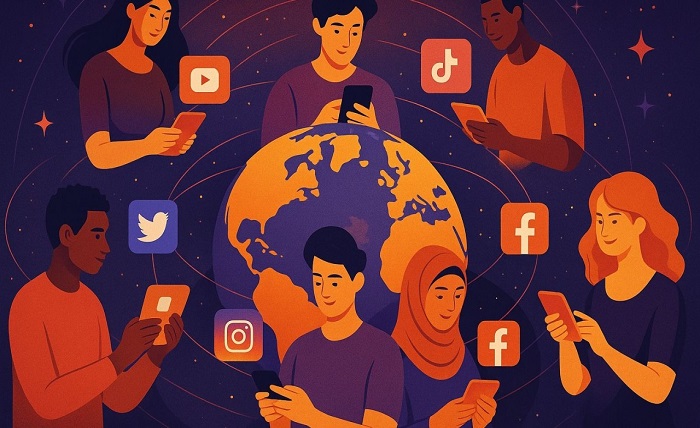
The competitive landscape for digital entertainment platforms has undergone a structural shift in the past three years. It is no longer sufficient to offer a good product at a competitive price — every major market has too many capable products at too many price points for product quality alone to be the primary retention mechanism. The platforms that are building the most durable user bases are those that have converted their users from customers into community members, and the primary channel through which that conversion happens is social media. Understanding how the most sophisticated digital entertainment operators are using social media strategy to build genuine community — rather than simply acquiring followers — reveals principles that apply across the entire digital product landscape.
The Community-First Social Media Approach That Changes Retention Economics
Why Community Converts Users Differently Than Acquisition Does
The economics of digital platform retention have a structural problem that every platform operator understands and most struggle to solve: the cost of re-acquiring a churned user is significantly higher than the cost of retaining an active one, and the users most likely to churn are those whose relationship with the platform is transactional rather than social. A user who uses a platform because it has the best available product will leave for a competitor the moment a better product becomes available. A user who is part of a community built around the platform — who has friends on it, whose identity is partly expressed through it, who contributes to conversations and shared experiences that exist only on this platform — has switching costs that are not captured by any product comparison.
Social media is the mechanism through which transactional users become community members, because it is the channel where the shared experiences, conversations, and cultural identity that constitute community are expressed and reinforced. A platform that maintains an active social media presence does not just remind users that it exists — it creates the ongoing stream of shared reference, community humour, and collective experience that gives users something to identify with beyond the functional value of the product itself.
The platforms that have most successfully leveraged this dynamic in the South Asian digital entertainment market are those that have built their social media strategy around the specific cultural identifiers and shared passions of their audience rather than around generic entertainment content. Cricket is the clearest example — not as a casual brand association but as a genuine cultural common ground that the platform and its users share at a level of emotional intensity that most product categories cannot access. A desiplay online app that organises its sports coverage around cricket, integrates live match engagement into its product experience, and builds its social media content around the emotional rhythms of the cricket calendar is not just serving a market — it is participating in a cultural community that has its own calendar, its own heroes, its own vocabulary, and its own shared emotional experiences that the platform’s presence in that community makes more vivid and more connected.
The Difference Between a Follower Strategy and a Community Strategy
Most digital platforms that invest in social media are pursuing a follower strategy — building the largest possible number of people who receive the platform’s content — rather than a community strategy, which focuses on the quality and depth of engagement rather than its quantity. The distinction matters commercially because the relationship between follower count and business outcome is weak, while the relationship between engagement quality and retention is strong.
A follower strategy optimises for content that attracts the widest possible audience — broad appeal, high production value, low friction for first-time encounters. This content performs well on reach metrics and poorly on the depth-of-engagement metrics that predict community formation. A community strategy optimises for content that deepens the relationship with the existing audience — content that rewards familiarity with the platform, that references shared experiences, that creates inside jokes and vocabulary that community members recognise and outsiders do not.
The platform that has ten thousand followers who engage deeply with every post, who comment from a position of genuine community membership, who share content because it expresses something about their identity, and who feel that the platform understands and serves their specific culture has a more valuable social media asset than the platform with one million followers who occasionally like generic content. This is not an argument against scale — scale matters — but an argument that scale built through community is commercially more valuable than scale built through mass appeal content that does not generate genuine affiliation.
The Content Strategies That Build Community Rather Than Audiences
The Formats and Approaches That Convert Passive Followers Into Active Members
The content formats that most reliably build community rather than audiences share specific structural characteristics that distinguish them from the broadcast content that most platform social media strategies default to.
Shared experience content — content that references experiences the audience has had collectively, often related to major cultural events — is the highest-performing community builder available to entertainment platforms. A post that captures the specific emotional texture of watching India’s last-over chase in a T20 final is not generic cricket content — it is a community recognition signal that says “we were all in that moment together, and we know exactly what it felt like.” The audience that resonates with this content is not just engaged with the post; it is recognising itself as a community, and that recognition is the mechanism through which platform affiliation is deepened.
User-generated content integration is the second highest-performing community building format. When a platform’s social media strategy creates visible space for user contributions — reposting user content, featuring user commentary, running competitions that solicit user creativity — it signals that the platform regards its users as participants rather than consumers. This signal is commercially significant because participation creates investment: a user whose own content has been featured by a platform has a relationship with that platform that is qualitatively different from one who only consumes the platform’s content.
Behind-the-scenes and transparency content builds a specific dimension of community trust that product content cannot generate. Showing how decisions get made, sharing the thinking behind product changes, acknowledging when things do not work as intended — this content humanises the platform in ways that build the kind of loyalty that survives product problems and competitive alternatives.
The numbered community-building social media strategy priorities for digital entertainment platforms are as follows:
- Identify the specific cultural passions that your core user base shares — not the interests that brought them to your platform but the deeper cultural identifiers that shape their sense of who they are and what they care about — and build your content strategy around genuine participation in those cultural conversations rather than brand association with them
- Create consistent content formats that reward community membership — recurring series, inside references, and shared vocabulary that followers who have been with the platform for months recognise and newcomers have to earn their way into understanding
- Build visible community infrastructure on your social channels — featured user content, community leaderboards, named community members, regular recognition of the most engaged participants — that makes community membership visible and therefore more desirable
- Respond to community content rather than just producing it — platforms whose social media teams actively engage with user comments, share user content, and participate in conversations rather than just broadcasting their own content build community trust at rates that broadcast-only strategies cannot match
The characteristics of social media strategies that most consistently convert digital entertainment platform users into genuine community members are:
- Cultural specificity — content that speaks to the particular cultural context of the platform’s core audience rather than generic entertainment content that any platform in any market could produce
- Emotional authenticity — content that acknowledges the full range of user experiences including losses, disappointments, and controversies rather than only the positive moments that brand content typically emphasises
- Participatory architecture — social media channels structured to invite and amplify user participation rather than optimised purely for one-way brand content delivery
Conclusion: Community Is the Retention Mechanism That Scale Cannot Replace
The digital entertainment platforms that will lead their markets over the next five years are not necessarily those with the best products or the lowest prices — they are those that have built the strongest communities around their platforms, and the primary mechanism through which those communities are built is social media strategy that prioritises depth of engagement over breadth of reach. The investment required to build a genuine community rather than a large follower count is different in character from the investment required to build a product — it requires consistency, cultural authenticity, and the willingness to engage rather than broadcast — but the commercial returns, measured in retention, advocacy, and switching cost, compound in ways that product investment alone cannot replicate. The platforms that understand this distinction and invest accordingly are building something that competitors cannot simply out-feature their way past.